Have a question? Contact us.


Email Us
Business Hours
Ring band getting thin? How to tell if it is at risk
A ring band getting thin is one of the most common warning signs we see before a crack or break. It usually happens slowly, then feels sudden when the band finally splits. In Fort Lauderdale, daily wear plus humidity, sweat, sunscreen residue, and sand grit can speed up wear, especially on the bottom of the band.
If you think your ring band is getting thin, the smartest move is to stop guessing and get it inspected before it fails. Start here for a free estimate: jewelry repair in Fort Lauderdale.
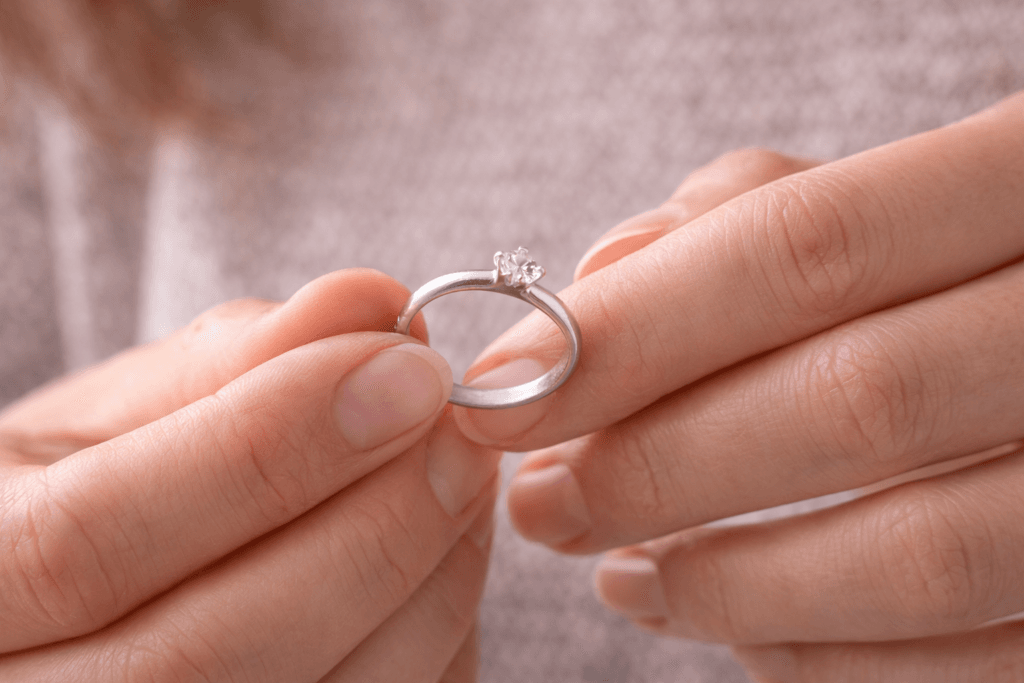
What “ring band getting thin” actually looks like
People expect thinning to look dramatic. Most of the time it is subtle until it is not. The bottom of the ring, the part that touches desks, steering wheels, gym equipment, and door handles, is usually where you see it first.
Common visual signs:
- A flat spot on the bottom of the band instead of a rounded profile
- The band looks narrower at the bottom than near the setting
- Edges look sharper or more “knife-like” from wear
- The ring looks slightly oval instead of perfectly round
- Tiny dents that appear easily, especially after bumps
Why rings wear thin in the same place
Thinning is not random. It is repeated contact and pressure in the same area, over and over. Even if you are careful, normal life creates friction and impact.
Common causes:
- Constant contact with hard surfaces: desks, countertops, weights, tools
- Steering wheels and carrying bags that press on the band
- Sand and grit acting like fine abrasive, especially after beach days
- Rings that spin or slide, which concentrates wear unevenly
- Older rings with years of polishing that removed small amounts of metal
In South Florida, buildup from sunscreen and sweat can also make people clean more aggressively than they should. Over time, that can contribute to thinning if the ring is frequently scrubbed with pressure.
Safe at-home checks you can do without tools
You do not need calipers to spot risk. The goal at home is to notice obvious differences and avoid bending or “testing strength.”
Safe checks:
- Compare the bottom thickness to the top by eye
Rotate the ring slowly in bright, indirect light. Look for the thinnest point. - Look for a hairline crack or a “stress line”
These often show as a faint line across the bottom of the band. - Check the shape on a flat surface
Set the ring down gently. If it rocks, wobbles, or looks oval, that can indicate deformation. - Notice how the setting sits
If the center stone looks slightly off, the band may be deforming and shifting the head. - Do not squeeze the ring to “see if it flexes.” Do not try to bend it back round. That is how a thin band turns into a broken band.
If you are seeing a stress line or shape change, stop wearing it and request a free estimate at jewelry repair in Fort Lauderdale.
Red flags that mean “stop wearing it”
Some signs mean the ring is close to failure. At that point, wearing it “just for tonight” is not worth it, especially if the ring has a valuable stone or sentimental value.
Stop wearing the ring if:
- You can see a visible crack line on the bottom of the band
- The ring suddenly looks more oval than round
- The setting is tilting or looks crooked when it used to sit straight
- You feel a new rough edge, snagging, or sharp spot
- The ring feels different after a snag or impact, even a minor one
- If you are also noticing the stone feels less secure, do not tap or shake the ring to test it. A weak band and worn prongs often show up together.
Common myths that lead to a break
These beliefs sound reasonable, but they cause people to wait too long or attempt risky DIY fixes.
Myths to avoid:
- “It is fine if it is not cracked yet.” Thin metal can fail quickly once it reaches a tipping point.
- “I can just squeeze it back round.” Bending stresses already-thin areas.
- “Polishing will fix it.” Polishing improves appearance, it does not add metal back.
- “A thinner band is more comfortable, so it is fine.” Comfort does not equal strength.
- “I only wear it sometimes, so the risk is low.” One snag at the wrong moment can finish the job.
What a jeweler usually recommends, and why
The right fix depends on how thin the band is, where it is thin, and how the ring is built. A jeweler will look at the wear pattern, the ring’s shape, and how the head and stones are supported.
Typical outcomes can include:
- Reinforcing the bottom of the band so it can handle daily wear
- Restoring the ring’s shape so the setting sits correctly
- Addressing related issues like snagging, loose stones, or worn prongs
- Discussing fit changes if spinning or sliding contributed to uneven wear
If the ring frequently spins or slides, sizing may be part of the long-term solution. Many people search “ring resizing near me” when they realize fit and wear are connected. If you want to review fit after the band is stabilized, see ring resizing.
How to store and transport a thin ring safely
If you have stopped wearing the ring, store it in a way that avoids pressure and impact.
Best practices:
- Place it in a padded ring box or soft pouch
- Keep it separate from other jewelry so it does not get knocked around
- Avoid tossing it into a purse, beach bag, or center console
- If you removed it because it was tight, do not force it back on later
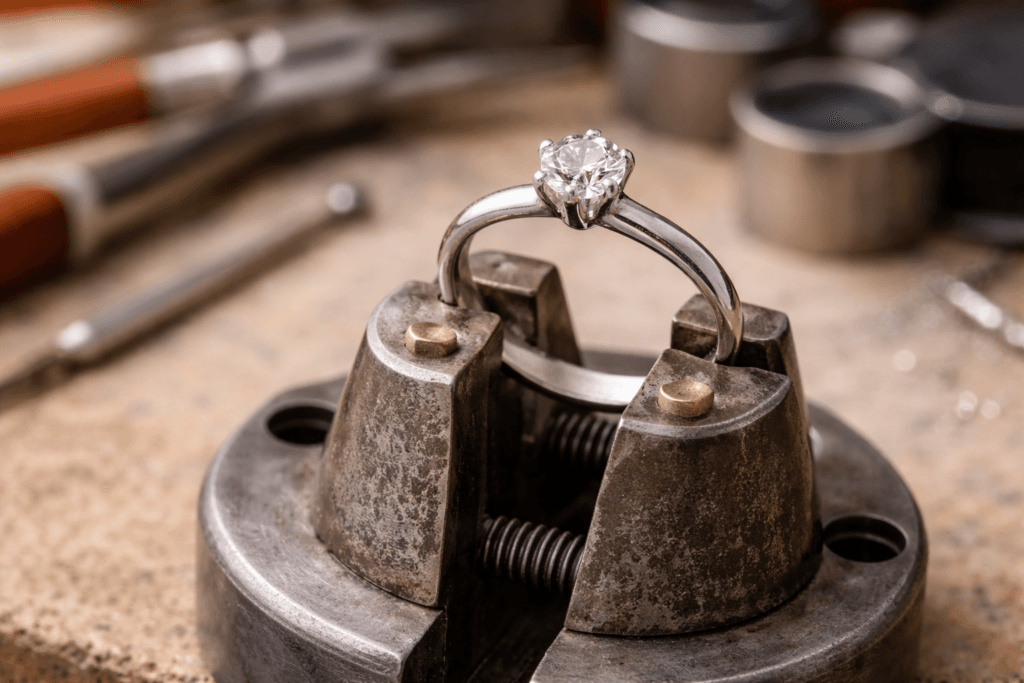
Get a free estimate at Luna Jewelers
If your ring band is getting thin, it is usually cheaper and easier to address before it cracks. Luna Jewelers is family-run, professional, and approachable, with in-house work, transparent pricing, insured custody, fast turnaround options, and a 12-month repair warranty. Walk-ins are welcome.
Luna Jewelers
1569 S Federal Hwy, Fort Lauderdale, FL 33316
Hours: Mon–Fri, 10am–6pm
Call: (954) 982-2532
Email: lunajewelers2025@gmail.com
Service area: Las Olas, Victoria Park, Wilton Manors, Flagler Village
FAQ:
How do I know if my ring band is too thin?
Look for a flat spot on the bottom, a narrower profile, sharp edges, or an oval shape. If you see a stress line or crack, stop wearing it and get it inspected.
Can a thin band cause stones to loosen?
Yes. A band that deforms can shift the setting and increase stress on prongs. If anything looks crooked or snags, treat it as urgent.
Should I stop wearing the ring if it has a small crack?
Yes. A small crack can spread quickly with normal wear. Store it safely and bring it in for evaluation.
Does resizing help if the band is wearing thin?
Sometimes. If spinning or sliding caused uneven wear, resizing can help after the band is stabilized. See ring resizing.
What causes a crack at the bottom of the ring?
Repeated pressure and contact at the bottom of the band causes gradual thinning. One snag or bend can turn a thin spot into a crack.